
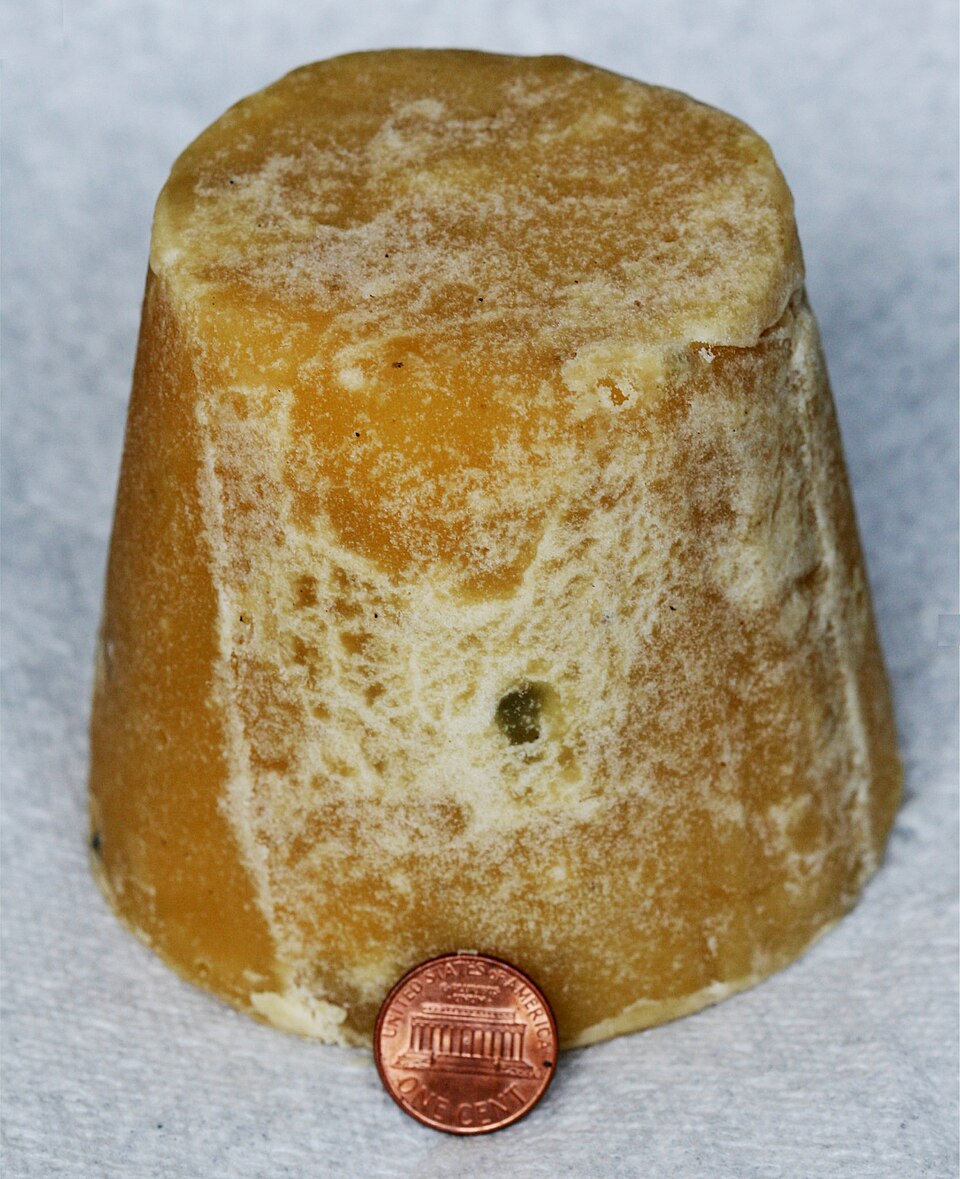
The claim: "Cheeni chhoro, gur khao" — swap white sugar for gur (jaggery) and everything improves. Gur is natural, full of iron and minerals, better for weight, and — the most repeated version — safe for diabetics, while white sugar is poison. Desi health influencers say it, grandparents swear by it, and "jaggery" products now charge premium prices in supermarkets on the strength of it. It's one of South Asia's most repeated health swaps. But when you compare the two gram for gram in a lab instead of in a slogan, the story gets uncomfortable — and for diabetics, genuinely dangerous.
To be fair to gur's fans, the claim didn't come from nowhere. White sugar is an industrially refined product, and the instinct to distrust heavy processing is healthy. But "less processed" and "healthier" are not the same thing — and with sweeteners, the molecule that reaches your bloodstream matters far more than the romance of how it was made.
The numbers: closer than you'd hope
| Per 100g | White sugar | Gur (jaggery) |
|---|---|---|
| Calories | ~387 | ~383 — virtually identical |
| Sugar content | ~100g sucrose | ~65–85g sucrose + glucose/fructose |
| Glycaemic index | ~65 (medium) | ~84 (high — higher than sugar) |
| Iron | 0 | ~2–3mg (small) |
| Magnesium / potassium | 0 | Trace amounts |
| Processing | Chemically refined, bleached | Boiled cane juice, minimally processed |
Read that again: gur has nearly identical calories and a higher glycaemic index than white sugar. The "natural" halo does not survive the nutrition table. Your blood sugar cannot tell whether its glucose came from a rustic gur block or a factory sugar cube — and if anything, it rises faster with gur.
What about the minerals? The math that ends the argument
Gur's defenders always land here: "but it has iron and minerals!" Technically true. Let's do the arithmetic honestly.
Gur contains roughly 2–3mg of iron per 100g — about 0.3mg per 10g (two teaspoons). An adult woman needs ~18mg of iron daily; a man ~8mg. To get even a quarter of a woman's daily iron from gur, she'd need to eat 150g of gur — 575 calories of pure sugar. Nobody should get their iron from candy. A single date, a handful of spinach, or one small bowl of dal delivers more usable iron than a day's worth of gur-sweetened chai, without the sugar avalanche.
The magnesium and potassium story is the same: present, measurable, and nutritionally trivial at any sane intake. This is the supplement-industry trick applied to a sweetener — advertising a trace nutrient as if the dose made it meaningful. If minerals are the goal, eat mineral-rich food. If sweetness is the goal, admit gur is sugar and count it as sugar.
One more honesty check: gur's mineral content varies wildly by source — cane variety, soil, how it was boiled, even adulteration (some commercial gur is coloured with additives). The "rich in minerals" claim assumes the best traditional product, not what's actually in the packet.
The diabetes myth — the dangerous one
This is where the gur claim stops being merely wrong and becomes actively harmful. Across South Asia, diabetics are told — by relatives, by WhatsApp forwards, sometimes by shopkeepers — that gur is "safe for sugar patients." It is not. With a glycaemic index around 84, gur spikes blood sugar faster than table sugar itself.
Think about what that means in practice: a diabetic who replaces 2 spoons of sugar with 2 spoons of gur in their chai, believing they've made a healthy choice, has actually made their glucose control worse — while feeling virtuous about it. The false sense of safety is the poison. At least white sugar's danger is honest; gur's danger comes disguised as health food.
The rule is absolute and simple: if you're diabetic, gur must be counted exactly like sugar — because metabolically, it nearly is. Rarely, in tiny amounts, inside your carb budget, with your doctor's knowledge. It is never a "free" alternative, and anyone telling a diabetic otherwise is spreading misinformation with real consequences — Pakistan and India already carry some of the world's heaviest diabetes burdens.
Why is gur's GI higher than sugar's? (The interesting bit)
It's a fair question — how can the "natural" sweetener spike blood sugar faster than refined sugar? The answer is chemistry. Table sugar is ~100% sucrose, a disaccharide your gut must first split into glucose and fructose before absorbing — that enzymatic step takes a little time. Gur, being less refined, contains significant amounts of already-split glucose and fructose ("invert sugar") alongside sucrose. Free glucose needs no splitting — it hits the bloodstream almost immediately. Less processing means faster absorption. Nature doesn't care about the marketing story.
This is a useful general lesson: "natural" describes a production method, not a metabolic effect. Honey, fruit juice, gur — all natural, all spike blood sugar fast, because the sugar molecules don't know their origin story.
Is there ANY honest case for gur?
Yes — a small one. Stripped of the health halo, gur has three genuine, modest advantages:
- Less processed: true. Gur skips the chemical refining, bleaching and sulphur treatments of white sugar. Whether that processing difference affects health is unproven — but if minimal processing matters to you as a principle, gur wins it.
- Taste — and the behaviour it changes: gur's deep caramel, earthy flavour is genuinely richer than sugar's flat sweetness. Many people find they use less gur because the taste is stronger — a smaller piece satisfies. If that's you, it's a real win — not because gur is healthier per gram, but because you eat fewer grams.
- Traditional sweets and cooking: for occasional mithai, gur is the tastier, less-refined choice — gur-wali kheer, til-gur in winter. Enjoy it as what it is: a delicious sweet, not a supplement.
Notice the pattern: every honest advantage is about taste, tradition and processing philosophy — none is about nutrition. Gur is a nicer sugar. It is still sugar.
Gur vs the other "healthy" sweeteners
| Sweetener | Calories/100g | GI (approx) | Honest verdict |
|---|---|---|---|
| White sugar | ~387 | ~65 | The baseline. Honest about being sugar. |
| Gur / jaggery | ~383 | ~84 | Nicer taste, less processed — but higher GI. Not healthier. |
| Shakkar (powdered jaggery) | ~383 | ~84 | Nutritionally identical to gur. Different texture, same metabolism. |
| Honey | ~304 | ~58 | Slightly lower GI; real antibacterial properties — but still sugar, and often adulterated. |
| Khandsari | ~385 | ~65–70 | Less refined than white sugar; nutritionally near-identical. |
| Dates / date syrup | ~280 | ~42–55 | Fibre and real nutrients — the best of this list, but still sugary in quantity. |
The takeaway: none of these is a health food. They differ at the margins — a little GI here, a little flavour there — but the health move is never which sugar. It's how much sugar, total, per day.
There is one more honest point worth making: the healthiest response to the gur debate isn't picking a winner — it's stepping off the treadmill. Research on taste adaptation shows sweetness preference is trainable: reduce total sweetener steadily for a few weeks and previously "normal" sweetness starts tasting excessive. Whole fruit is the best landing zone — an apple or a few dates deliver sweetness with fibre, water and genuinely meaningful nutrients, slowing sugar absorption in a way no extracted sweetener can match. Gur versus sugar is a debate about which candy is less bad; fruit is the actual upgrade.
How to use sweeteners right
- Pick by taste, count by grams: like gur's flavour? Use gur — and count every gram exactly as you would sugar. The swap that matters is using less, not switching type.
- Shrink the total: the WHO suggests keeping added sugars under ~6 teaspoons (25g) a day. Most desi households cross that in chai alone. Reduce gradually — half-spoon steps — and taste buds adapt within weeks.
- Watch the hidden sugars: biscuits, "juices," flavoured yoghurts, sauces and bakery items carry more sugar than your chai ever will. The gur-vs-sugar debate distracts from these far bigger sources.
- Read mithai honestly: "gur mithai" is still mithai — concentrated sugar with a traditional costume. Enjoy on occasions; don't file it under health food.
- For diabetics: all sweeteners — gur, honey, shakkar — go inside the carb budget, in small amounts, with glucose monitoring. Artificial sweeteners are an option for chai; they're not perfect, but they don't spike glucose.
- Beware premium "jaggery" marketing: jaggery powder in fancy packaging at 5x the price is still jaggery. You're paying for the story.
Who should be careful
- Diabetics and pre-diabetics: the highest-risk group for this myth. Gur is not safe, not free, and not "diabetic-friendly" — treat it as sugar, full stop. Discuss sweetener choices with your doctor, not your WhatsApp group.
- Anyone losing weight: gur's calories are identical to sugar's. "Healthy" sweeteners don't create a calorie discount — a gur-sweetened dessert still counts fully.
- Fatty liver: gur's free fructose heads to the liver just like any sugar's. Excess intake drives liver fat regardless of the sweetener's origin.
- Children's teeth: sticky gur sweets cling to teeth; the "natural" label doesn't protect enamel. Brush habits matter more than sweetener choice.
- Everyone buying "mineral-rich" gur: commercial gur quality varies enormously — some is cut with sugar, coloured artificially, or made with chemical clarifiers. If you buy gur, buy from a trusted source, and buy it for taste — not for imaginary iron.
Quick questions
Can diabetics eat gur in small amounts?
Only exactly like they'd eat sugar — rarely, in tiny amounts, counted inside their carb budget, with glucose monitoring. Gur's higher GI makes it, if anything, worse than sugar. It is never a free or safe alternative.
Is shakkar (powdered jaggery) different from gur?
Nutritionally, no — same calories, same sugars, same metabolic effect. It's just gur in powdered form. The same rules apply.
What about honey vs gur?
Honey has a slightly lower GI (~58) and genuine antibacterial properties, but it's still sugar by metabolism — and commercial honey is often adulterated. Neither is a health food; honey edges it only slightly.
Does gur really contain iron?
Yes, but trivially — about 0.3mg per two teaspoons against a daily need of 8–18mg. You'd need 150g of gur (575 calories of sugar) for a meaningful dose. Get iron from dal, spinach, meat or dates instead.
Why do people say gur is good for digestion or coughs?
Traditional remedies pair gur with ginger, ajwain or warm water — the other ingredients likely do the work. There's no clinical evidence that gur itself aids digestion, clears a cough, or "cleanses" anything. It's folklore riding on tasty remedies.
Is khandsari healthier than both?
Marginally less refined than white sugar, but nutritionally near-identical — same calories, similar GI. It's a processing preference, not a health upgrade.
What's the best sweetener for daily chai?
The honest answer: the least total sugar, whatever the type. Reduce gradually to half a spoon or zero — spices like elaichi and adrak make it painless. For diabetics, discuss options (including stevia-type sweeteners) with a doctor rather than trusting "natural" labels.